

Google has confirmed, on the record, that ChromeOS is being merged into Android under a new unified platform internally referred to as Aluminium OS. Unlike a lot of speculative platform news, this wasn’t a leak or an anonymous source, it came directly from Sameer Samat, Google’s president of the Android ecosystem, at Qualcomm’s Snapdragon Summit in September 2025, and was reinforced afterward in a follow-up interview with TechRadar.
What Google actually said

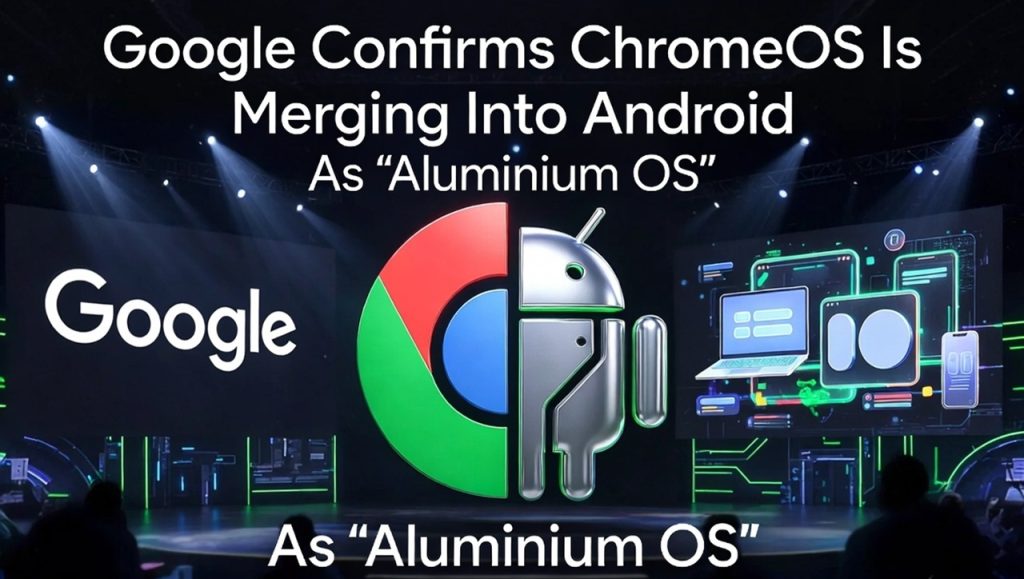
Samat stated directly that Google is combining ChromeOS and Android into a single platform, rebuilding ChromeOS’s user experience on top of Android’s underlying technology rather than continuing to maintain two entirely separate operating systems in parallel. This is a genuine architectural merger, not simply a rebrand or a shared app store, meaning ChromeOS as a distinct operating system is being phased out in favor of a unified foundation.
Google has framed the primary motivation around AI development speed. The stated goal is bringing the pace of Android’s AI feature development, specifically Gemini integration, to laptop-form-factor devices faster than maintaining ChromeOS as a separate codebase would realistically allow. A secondary, unified developer experience across phones, tablets, and laptops is the other major benefit Google has pointed to.
Some reporting has also connected this move to broader antitrust pressure Google has faced regarding its Chrome browser, though Google’s own public statements have focused specifically on the AI and ecosystem-unification rationale rather than regulatory factors.
What happens to existing Chromebooks
This isn’t an abrupt cutover, and Google has been explicit about that. Existing Chromebooks are getting a full 10 years of software updates, meaning current devices aren’t being orphaned by this transition, even as the underlying platform strategy shifts beneath them. Google has reportedly tested the new unified approach across multiple hardware tiers internally, suggesting the intention is to support everything from budget Chromebooks through higher-end devices under the eventual unified platform, rather than reserving it for premium hardware only.
The exact public rollout timeline remains somewhat unsettled as of mid-2026. Court filings referenced in reporting around this transition have suggested a full public release could land closer to 2027 or 2028, meaning this is very much a multi-year transition rather than something happening imminently.
Why this is genuinely different from Windows 12 speculation
It’s worth being direct about why this story is worth covering here at all, on a site otherwise focused on Windows 12. The comparison that keeps coming up in search behavior is between Google’s platform move and Microsoft’s long-rumored modular Windows architecture, sometimes called CorePC, which would similarly simplify and modernize Windows’s underlying structure.
The difference is that Google’s move is confirmed, on the record, by a named executive, with a stated rationale and a general (if still shifting) timeline. Microsoft’s CorePC concept, despite years of leaks and internal references tracing back to the shelved Windows Core OS and Windows 10X projects, has never shipped publicly, and there’s no current evidence it’s actually part of Microsoft’s near-term roadmap. We cover exactly where CorePC stands as a concept versus reality in Windows 12 Features: What’s Rumored, Confirmed, and Already in Windows 11, and how the two companies’ architectural directions compare directly in Windows 12 vs ChromeOS: Is a Lightweight Windows Coming?.
Why AI is the common thread across both stories
Google’s stated rationale for merging ChromeOS into Android, faster AI feature deployment across device categories, mirrors the underlying pressure driving Microsoft’s own Copilot+ PC strategy. Both companies have concluded that their existing architecture creates friction in how quickly they can ship AI capability across their full hardware lineup, and both are responding, just from very different starting points and confirmed-versus-rumored footing. Apple, for its part, made a similarly AI-motivated move with its recently announced Siri AI overhaul at WWDC 2026, suggesting this pressure is industry-wide rather than specific to any one company. We cover that announcement in Apple Announces Siri AI at WWDC 2026: How It Compares to Copilot.
What this means if you’re currently using or considering a Chromebook
If low-maintenance, fast-booting, simple computing is specifically what draws you to ChromeOS, none of this changes that value proposition today, and Google’s 10-year update commitment means an existing Chromebook purchase remains a reasonable investment even through this transition. If you’re shopping for a new device specifically hoping to get ahead of the Aluminium OS transition, there’s not yet a clear public signal about which specific upcoming hardware will be positioned as first-wave devices for the unified platform, given the rollout timeline itself remains unsettled.
What this means if you were waiting to see whether Windows would go a similar direction
If part of your interest in this story is wondering whether Microsoft might follow with its own confirmed modular architecture announcement, there’s no direct evidence suggesting that’s imminent. Microsoft’s public statements around Build 2026 specifically addressed near-term OS version plans, confirming no new Windows version is part of upcoming announcements, without touching on architectural strategy specifically. For the fullest, continuously updated picture of where Windows’s own architecture speculation stands, see our Windows 12 release date and status tracker.
The regulatory angle worth watching
Even though Google’s own public messaging centers on AI development speed, the antitrust context around Chrome shouldn’t be dismissed entirely as a contributing factor. Google has faced sustained regulatory scrutiny over its browser and search dominance in recent years, and platform-level restructuring of this scale inevitably intersects with that broader legal environment, whether or not it’s the primary stated driver. Anyone following this story closely is worth watching for how regulatory proceedings and this platform merger continue to intersect as both develop over the coming months.
Realistic timeline expectations
Given that court filings have suggested a full public release landing closer to 2027 or 2028, this is not a transition current Chromebook owners or prospective buyers need to react to immediately. Internal testing across multiple hardware tiers suggests Google is taking a methodical approach rather than rushing a public release, which is a reasonable strategy given how disruptive a botched platform merger could be for its existing Chromebook user base and the education and enterprise markets that rely heavily on ChromeOS specifically.
Frequently asked questions
Is ChromeOS being discontinued immediately? No. It’s being gradually merged into a unified platform built on Android’s foundation, with existing Chromebooks receiving a full 10 years of software updates during the transition.
Who confirmed this merger, and when? Sameer Samat, Google’s president of the Android ecosystem, confirmed it directly at Qualcomm’s Snapdragon Summit in September 2025, later reinforced in a TechRadar interview.
Why is Google merging ChromeOS into Android? Google’s stated primary reason is accelerating AI feature development, particularly Gemini integration, across laptop-form-factor devices at the same pace as phones and tablets, along with unifying the developer experience across device categories.
When will Aluminium OS actually be publicly available? No confirmed public release date exists yet. Court filings referenced in reporting suggest a full rollout could land closer to 2027 or 2028, meaning this is a multi-year transition rather than an imminent change.
Does this relate to Microsoft’s own Windows architecture rumors? Only by comparison. Google’s move is confirmed and on the record, while Microsoft’s long-rumored modular Windows architecture (CorePC) remains unconfirmed speculation with no evidence it’s an active near-term project.