Nearly everything you’ve seen described as a “leaked Windows 12 interface” is concept art made by independent designers, not a screenshot from an actual Microsoft build. That’s not a criticism of the designers, some of this work is genuinely impressive, but it means treating these images as evidence of what a real future release will look like is a mistake that a lot of content online makes anyway, deliberately or not.
Here’s how to tell the difference, and where the actual visual speculation is coming from.
Why concept art keeps getting mistaken for real leaks
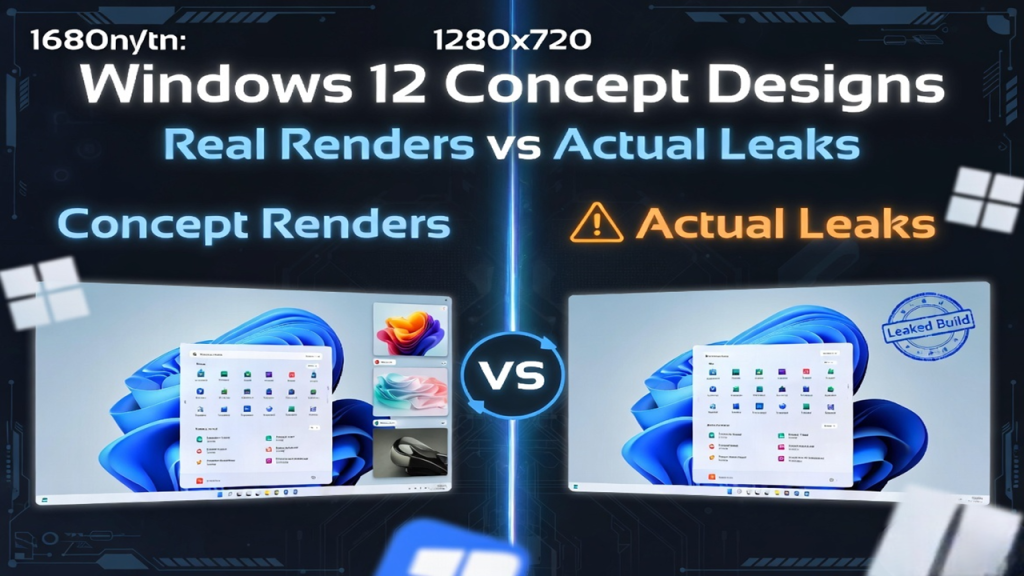
A few things make this mix-up especially common with Windows 12 specifically:
The images are often genuinely well produced. Independent designers working in this space typically have real skill with UI mockup tools, which means the results can look polished enough to pass as an actual product screenshot to someone scrolling quickly rather than examining closely.
Attribution gets stripped during resharing. A designer will post a concept clearly labeled as their own creative work, often with a name or handle attached, and then a secondary site or social media post reshares the image without that context. By the third or fourth reshare, it’s circulating as an unlabeled “leak” with no trace of its actual origin.
There’s a real audience hungry for any visual. Given how long “Windows 12” has been a search term without an actual product behind it, any image claiming to show it gets shared widely regardless of its source, simply because demand for visual content outpaces the supply of anything genuine.
A handful of real Windows 11 test features get mislabeled too. Occasionally, an actual Windows 11 Insider build will test a genuine interface change, like an experimental taskbar layout or a redesigned Settings panel, and that legitimate but early Windows 11 material gets recaptioned online as a “Windows 12 leak” rather than accurately described as what it actually is.
Notable concept work in this space
One example that gained real attention is designer Abdi’s “Brilliant Windows 12” concept, which surfaced in September 2025 and proposed original ideas like a feature for organizing wallpapers and collections, along with enhanced quick-settings and screenshot tools. This is a clearly creative, independent project, built around the designer’s own vision for what a future Windows interface could look like, not a leak of anything Microsoft has actually built. It’s worth knowing about specifically because it’s one of the more frequently recirculated pieces of concept art in this space, and recognizing it for what it is (a talented designer’s speculative work) rather than misreading it as inside information matters if you’re trying to form an accurate picture of what’s actually confirmed.
Concept work like this tends to follow a consistent creative throughline: building on Windows 11’s existing visual language while pushing toward more rounded, adaptive, AI-integrated interface elements. That’s a reasonable creative direction given where Microsoft’s actual design language has been heading, but it’s speculation about aesthetics, not a preview of a confirmed product.
How to actually tell a concept from a real leak
A few reliable checks, in order of usefulness:
Look for a named creator or studio. Genuine concept work is almost always attributed, since designers want credit for their portfolios. If an image circulates with no name, no source link, and no context, that’s often because attribution was stripped somewhere along the way, not because it’s more “real.”
Check for a visible build number or watermark. Actual Windows Insider builds display a build number watermark in the corner of the desktop, and legitimate leaks of real builds typically include or reference this. Polished concept renders almost never include this detail, since it’s not something a designer working in a mockup tool would think to fake.
Search the image directly. A reverse image search often traces a “leaked” screenshot straight back to a designer’s original portfolio post, Behance page, or social account, at which point the original caption usually says plainly that it’s a concept.
Be suspicious of extremely polished branding details. Real early builds are often visually inconsistent, with placeholder icons, mismatched fonts, or unfinished elements, since they’re genuinely works in progress. A concept render tends to be clean and internally consistent throughout, because it’s built by one designer executing a single unified vision rather than reflecting the messier reality of in-progress engineering.
Cross-reference with established Windows reporting. If an image were genuinely from a real, significant leak, outlets like Windows Central, The Verge, or Neowin would very likely be covering it directly, with their own sourcing, rather than it existing only as an unlabeled image on social media.
What we can say about real interface direction, separate from concept art
Setting fan-made renders aside, Microsoft’s actual, confirmed interface direction in current Windows 11 releases gives a more grounded sense of where visual design is genuinely heading. Recent feature updates have continued refining File Explorer, taskbar behavior, and Settings, generally moving toward more contextual, AI-assisted interactions rather than a dramatic visual overhaul. If a next-generation release does arrive, the most defensible expectation is an evolution of this existing direction, not a completely unrecognizable redesign, since that’s consistent with how Microsoft has approached visual changes across recent Windows 11 updates rather than a single dramatic jump.
For the fuller picture of what’s confirmed, credibly rumored, and outright debunked across Windows 12 more broadly, not just the visual side, see our complete breakdown in Windows 12 Features: What’s Rumored, Confirmed, and Already in Windows 11.
Why this matters beyond just satisfying curiosity
Getting this distinction right isn’t purely academic. Pages that present concept art as leaked, confirmed material contribute directly to the broader misinformation cycle around Windows 12, the same cycle that fuels fake ISO download scams and inflated “confirmed” release date claims. If you’re trying to build an accurate mental model of where things actually stand, correctly identifying a polished fan render as exactly that, rather than inside information, is part of that same skill set. We walk through the same evaluation framework applied to written rumors and claims, not just images, in Is Windows 12 Real? Fact-Checking the Rumors.
If you’re specifically hoping to see real interface changes early
The only legitimate way to see genuine, in-progress Windows interface work ahead of general release is through Microsoft’s own Windows Insider Program, where test builds occasionally include real experimental design elements, clearly documented with actual build numbers and official release notes. That’s meaningfully different from viewing an artist’s unofficial concept and assuming it reflects Microsoft’s actual direction. We’ve laid out exactly how to join in How to Join the Windows Insider Program for Early Access to the Next Windows Release.
Quick clarifications
Are the popular “Windows 12 screenshots” online real? No, the overwhelming majority are independent concept art made by designers, not actual Microsoft screenshots. Some genuine early Windows 11 test features have also been mislabeled as Windows 12 after losing their original context during resharing.
Is it wrong for designers to make Windows 12 concept art? Not at all. This is legitimate, often skillful creative work. The issue is entirely with how it gets recirculated and mislabeled as a leak rather than credited as speculative design.
How can I verify if an image is a real leak? Check for a visible build number watermark, search for the original source through a reverse image search, and cross-reference against established Windows reporting outlets before assuming an unlabeled image is genuine.
Does concept art tell us anything real about Windows 12’s design? It reflects designers’ informed guesses about where Microsoft’s aesthetic direction might go, often extrapolating from real current Windows 11 design language, but it isn’t confirmation of anything Microsoft has actually built or planned.