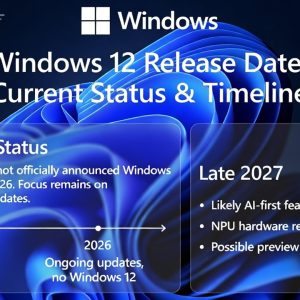
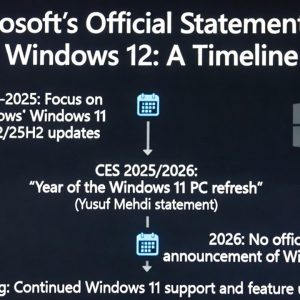
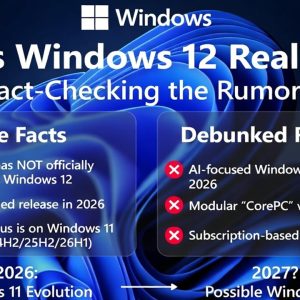
No, they’re not the same thing, even though the timing of Windows 11 26H1’s rollout has led a lot of people to assume otherwise. Windows 11 26H1 is a scoped feature update to the existing Windows 11 platform, built for new devices launching in early 2026. Windows 12 is an unconfirmed, unreleased product with no official name, date, or feature list attached to it yet. The confusion is understandable, but the two are not interchangeable, and treating 26H1 as a quiet Windows 12 launch will leave you with the wrong expectations about what’s actually on your PC.
Here’s the actual breakdown.
What Windows 11 26H1 actually is
Windows 11 version 26H1 became available starting February 10, 2026, but its scope is narrower than a typical annual feature update. Microsoft positioned it specifically to support new devices coming to market in early 2026, rather than as a broad update rolling out automatically to every existing Windows 11 24H2 or 25H2 machine. If you’re already running Windows 11 today, you may not see 26H1 land on your device the way you’d expect a full annual update to behave, precisely because it’s aimed at new hardware rather than existing installs.
This naming convention itself isn’t new. Microsoft has used the “YYHN” format (year, half of year) for Windows 11 feature updates going back to 21H2 at launch in 2021, followed by 22H2, 23H2, 24H2, and 25H2. 26H1 breaks slightly from the second-half pattern by landing in the first half of the year, which is part of why it drew extra attention and speculation.
Why people think 26H1 might secretly be Windows 12
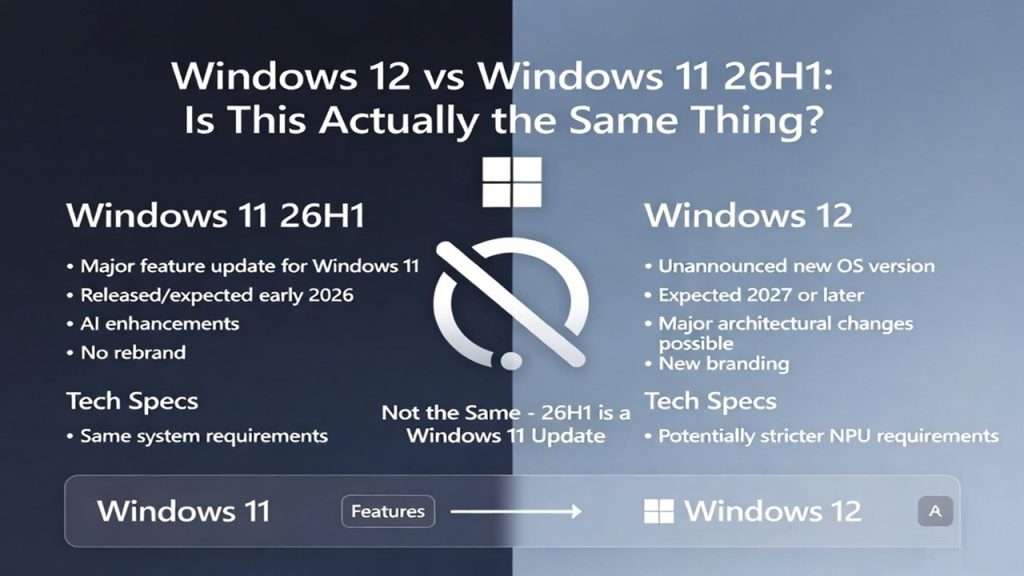
A few real factors fed this theory, even though none of them hold up under scrutiny:
The naming pattern shifted. Every prior Windows 11 update used the “H2” (second half) designation. 26H1 breaking that pattern felt, to some, like a signal that something bigger was changing under the hood, possibly a rebrand.
It’s scoped to new hardware only. Because 26H1 targets new devices specifically rather than rolling out universally, some coverage speculated this meant Microsoft was quietly introducing next-generation requirements, the same way a true “Windows 12” launch might.
The timing lined up with Windows 12 hype. 26H1 arrived in February 2026, right in the middle of a wave of Windows 12 speculation that had been building since late 2025. When two stories overlap in timing, it’s easy for search engines and social media to blend them into one narrative, especially when headlines compress “new Windows update for new PCs” into something that reads like “new Windows version.”
None of this amounts to evidence that 26H1 is Windows 12 under a different name. It’s evidence that Microsoft is still actively iterating on Windows 11’s release structure, which is a normal part of software development, not a hidden rebrand.
Direct comparison: what’s confirmed vs what isn’t
| Windows 11 26H1 | Windows 12 | |
|---|---|---|
| Official status | Confirmed, released Feb 10, 2026 | Unconfirmed, unreleased |
| Scope | New devices launching in early 2026 | N/A, no product exists yet |
| Version numbering | Continuation of Windows 11’s YYHN system | No confirmed numbering or branding |
| Feature list | Incremental refinements building on 25H2 | Unknown, no official feature list |
| Hardware requirements | Same general Windows 11 requirements, targeted at new device launches | Unknown, speculation points to deeper NPU/AI requirements |
| Support timeline | Falls under Windows 11’s existing support commitments | N/A |
| Availability if you own a current PC | May not apply directly unless you’re buying new hardware | Not available in any form |
The clearest way to think about it: 26H1 is a real, shipping, documented update within the Windows 11 family. Windows 12 is a name attached to an unreleased, unconfirmed future product. They exist in completely different categories of certainty.
What Microsoft has actually said about this
In May 2026, ahead of Build 2026, Pavan Davuluri, who leads both Windows and Surface at Microsoft, directly addressed the swirl of “new era of PC” teasers from Microsoft, NVIDIA, and Arm’s social accounts by confirming that upcoming announcements would not include a new operating system version. That statement applies here too. If 26H1 were secretly a Windows 12 rollout, that would have been the natural moment to say so, and Microsoft explicitly said the opposite.
For the full timeline of what Microsoft has confirmed, denied, and left open, see our Windows 12 release date and status tracker, which we keep updated as new statements or leaks emerge.
Does 26H1 give you any of the features rumored for Windows 12?
Some of them, yes, but that’s a function of how Microsoft develops Windows generally, not evidence of a secret rebrand. Microsoft has been rolling AI and Copilot+ features into Windows 11 incrementally across 24H2, 25H2, and now 26H1, rather than saving them all for a future major release. This includes expanded Copilot integration, on-device AI features tied to NPU-equipped hardware, and refinements to search and system features.
If a future Windows 12 does eventually launch, it will likely build on these same AI foundations rather than introducing them from scratch, since Microsoft has already invested heavily in this direction within Windows 11. That continuity is actually one reason some analysts think Microsoft may be in less of a hurry to launch a distinctly named successor: the AI-forward direction people associate with “Windows 12” is already showing up inside Windows 11 updates like 26H1.
Should you treat 26H1 as your Windows 12 upgrade?
If you’re buying a new PC in 2026, 26H1 is simply the version of Windows 11 it’s likely to ship with, and there’s nothing to “upgrade” toward beyond that. If you already own a Windows 11 device, 26H1 may not change much for you directly, since its scope is aimed at new hardware rather than a universal experience overhaul. In either case, there is currently no separate Windows 12 product to wait for or compare it against, since nothing has been released.
If your actual question is whether it’s worth updating to whatever the latest Windows 11 version is, the answer is generally yes. Staying current with Windows 11’s supported versions keeps you eligible for security updates and new features as Microsoft rolls them out, regardless of what eventually happens with a future Windows 12.
The bigger pattern worth understanding
This isn’t the first time an incremental Windows update got mistaken for a bigger rebrand. Windows 10’s later feature updates occasionally sparked similar “is this secretly Windows 11” chatter before Windows 11 actually launched in 2021. Microsoft’s version naming has never been perfectly predictable (the company skipped “Windows 9” entirely, jumping from 8.1 straight to 10), which makes it easy for any naming quirk to fuel bigger rebrand theories than the evidence actually supports.
The practical lesson: an update landing outside the usual pattern, or scoped differently than prior releases, is not on its own proof of a hidden major version. It’s just as often a sign that Microsoft is adjusting its release process, which happens regularly and rarely means what social media speculation assumes it means.
Frequently asked questions
Is Windows 11 26H1 actually Windows 12 with a different name? No. Windows 11 26H1 is a confirmed, scoped update to Windows 11 for new devices launching in early 2026. Windows 12 remains unconfirmed and unreleased, with no official name, date, or feature list.
Why did 26H1 break from the usual “H2” naming pattern? Microsoft scoped 26H1 specifically to support new devices arriving in the first half of 2026, which is why it doesn’t follow the second-half naming convention used by 21H2 through 25H2.
Will I get Windows 11 26H1 automatically on my current PC? Not necessarily. Because 26H1 is scoped toward new device launches, its rollout behaves differently than a typical annual feature update pushed to all existing Windows 11 installs.
Does 26H1 include the AI features rumored for Windows 12? It includes incremental AI and Copilot+ features consistent with Microsoft’s ongoing direction for Windows 11, but this reflects continuous development rather than a secret Windows 12 release.
Should I wait for Windows 12 instead of updating to 26H1? Since there’s no confirmed release date or product for Windows 12, waiting isn’t practical for most people. Keeping your current Windows 11 installation updated is the more reliable option.